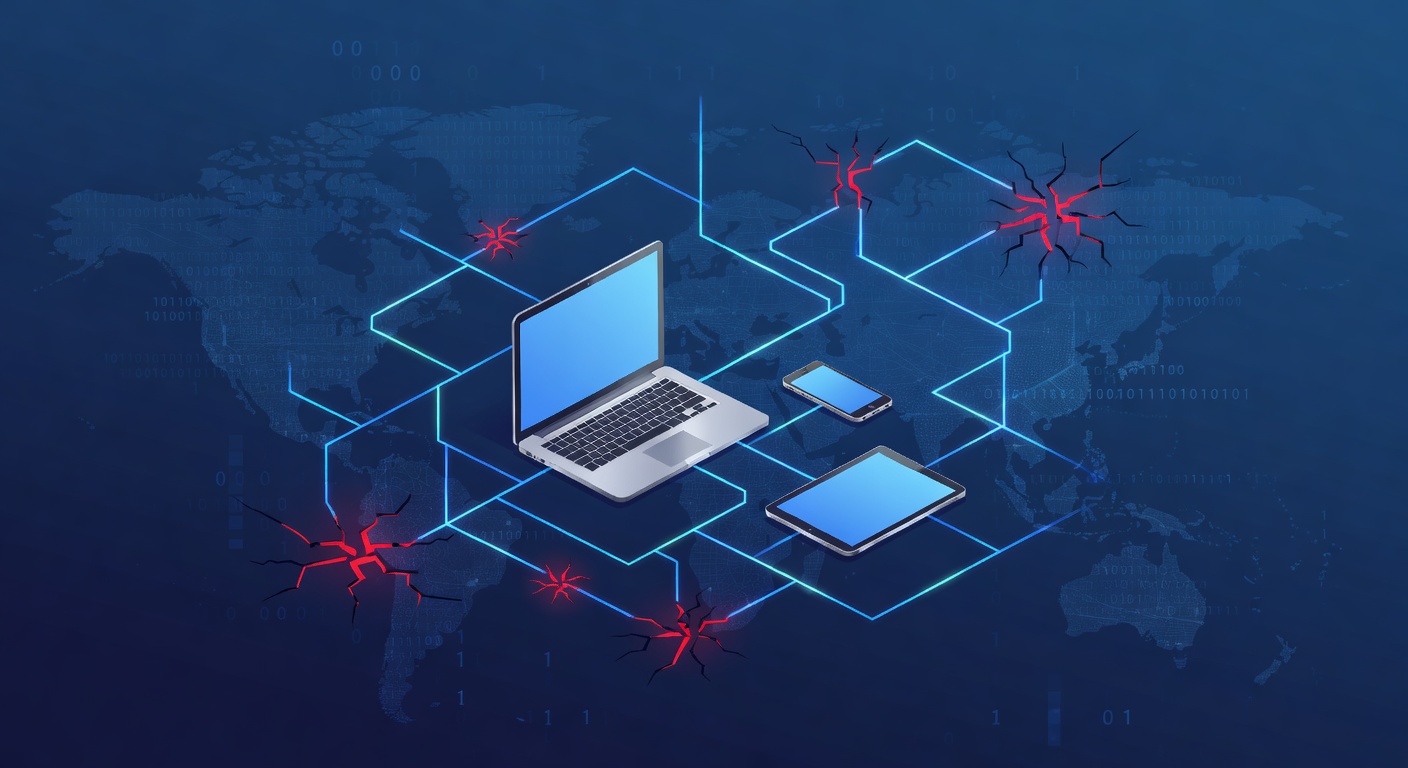
Your Devices Are Your Weakest Link (And Why That Should Terrify You)

Every laptop, phone, and tablet in your organization is a potential gateway for hackers to infiltrate your entire business. Most companies treat endpoint security as an afterthought—and that's exactly the mistake that leads to catastrophic breaches.

Your Devices Are Your Weakest Link (And Why That Should Terrify You)

Let me be blunt: if you're not actively securing every single device on your network, you're essentially leaving the front door of your business unlocked while you sleep.

I know that sounds dramatic, but stick with me here. The reason so many companies get hacked isn't because cybercriminals are geniuses (though some are). It's because most organizations have terrible endpoint security, and hackers know it.

What Even Is an Endpoint?

Before we talk about security, let's clarify what we're actually protecting.

An endpoint is any device that connects to your network and stores or accesses data. Think of it as the actual terminals in your business where work happens. That includes:

  • Your office desktops and laptops
  • Employee smartphones and tablets
  • Company servers
  • Smart IoT devices (printers, security cameras, you name it)

What's not an endpoint? The infrastructure that helps devices communicate—routers, firewalls, switches, and network gateways are just the middle men. They don't store data or directly access your systems. The actual endpoints? Those are the dangerous ones. Those are where data lives.

Why Your Security Strategy Is Probably Failing

Here's what I see happen over and over: companies invest heavily in firewalls and perimeter security, then completely ignore what's happening on individual devices. It's like putting a massive lock on your front door while leaving every window open.

The Patch Management Problem

Your employees are busy. They get notifications to update their software, and they ignore them. Or they restart their computer for the update and it takes forever, so they delay it. And another week goes by. Then another month.

Before you know it, a security vulnerability that was patched three months ago is still active on 40% of your company's devices. That's not a theoretical problem—that's how real breaches happen. Outdated software is like a welcome mat for hackers.

Lost and Stolen Devices

Someone leaves their laptop at an airport. A contractor's tablet gets left in an Uber. You think "oh well, I can remotely wipe it." But can you? Only if you actually set up the systems to do that. And most companies haven't.

The moment one of those devices connects to the internet—or even sits in someone else's hands—it becomes a potential entry point to your entire network. If your business relies on BYOD (bring your own device) policies, this problem gets exponentially worse. You have zero visibility into what's actually on those devices.

Personal Devices = Zero Control

Mobile phones are particularly concerning. An employee's personal smartphone might have dozens of sketchy apps, weak security settings, and zero encryption. But if it connects to your company email or accesses internal systems? Congratulations—you've just given hackers a backdoor into your business infrastructure.

The worst part? You can't even force the person to update their phone's security if it's their personal device. You're essentially trusting someone's personal security habits with your company's sensitive data. That's... not ideal.

One Compromised Device Can Destroy Everything

Remember the turnstile jumper analogy? If one person sneaks past security, they get access to the entire subway system. Same concept with your network.

A hacker who compromises a single endpoint—say, an accountant's laptop—might gain access to:

  • Email systems containing sensitive client information
  • Financial records and banking details
  • Internal communication platforms
  • Access to other networked devices they can laterally move through
  • Trade secrets, contracts, and proprietary information

A single unsecured device can be the thread that unravels your entire security infrastructure. And with remote work and hybrid work models, employees are connecting from coffee shops, home networks, and airport lounges. The attack surface just keeps expanding.

So How Do You Actually Fix This?

Let me give you the practical blueprint:

Monitoring Everything

You need visibility into every device on your network. That means deploying Remote Monitoring & Management (RMM) software that tells you:

  • Where each device is located (by IP address)
  • What's installed on it
  • When was it last updated
  • Is it compliant with your security policies
  • Is it currently infected or compromised

This isn't about spying on employees—it's about knowing what's connected to your business. You wouldn't let someone plug an unknown computer into your network, right? This is the digital equivalent.

Automated Updates and Patch Management

Stop relying on humans to update their own software. Automate it. Deploy patches and security updates in controlled batches during off-hours so they don't disrupt work. No more excuses. No more waiting.

The moment a security vulnerability is identified, patches should be rolling out automatically to every device. This single step eliminates a huge percentage of the attack vectors cybercriminals use.

Mobile Device Management

For smartphones and tablets, implement Mobile Device Management (MDM) solutions that allow you to:

  • Enforce password requirements
  • Enable encryption
  • Manage app installations
  • Remotely wipe devices if they're lost or an employee leaves
  • Monitor compliance with security policies

And yes, you can do this even with personal devices without actually spying on people's private data.

Clear Policies and Enforcement

Your employees need to know what you expect from them. Create documented policies about:

  • How often devices must be updated
  • What constitutes acceptable use of company systems
  • How personal devices can be used to access company resources
  • Consequences for non-compliance

Then actually enforce these policies. Monitoring tools should flag devices that violate them, and there should be real consequences.

The Real Cost of Ignoring This

Let me put this in dollars and cents: a single data breach costs companies an average of $4.45 million (and that's just the direct costs). When you factor in downtime, reputation damage, regulatory fines, and legal fees? Some companies never recover.

And most of these breaches could have been prevented with basic endpoint security practices. Not cutting-edge stuff. Just fundamental, boring, "did you remember to update your computer?" hygiene.

The Bottom Line

Endpoint security isn't glamorous. It's not the kind of thing that impresses executives in a meeting room. But it's absolutely fundamental to protecting your business.

Every device connected to your network is either secured or it's a liability. There's no middle ground. You either have visibility and control, or you're just hoping hackers don't find that one laptop someone forgot to update three months ago.

Don't be that company. Start with the basics: identify every endpoint, monitor them automatically, patch them consistently, and enforce clear policies. It won't guarantee you'll never get hacked—but it'll make your business a much harder target than 90% of your competitors.

And for hackers? Hard targets aren't worth the effort. They'll just move on to someone else.

Tags: ['endpoint security', 'cybersecurity', 'mobile device management', 'network security', 'patch management', 'byod security', 'data breach prevention', 'it security best practices']