Why Small Businesses Need Both an MSP and Cyber Insurance (Not Just One)

Most small business owners think hiring a managed service provider (MSP) is enough to protect their company. But here's the uncomfortable truth: even the best MSP can't stop every attack. That's where cyber insurance comes in — and together, they create a safety net that actually works.

Why Small Businesses Need Both an MSP and Cyber Insurance (Not Just One)

I talk to a lot of small business owners, and I notice a pattern. They fall into one of two camps: those who've invested in managed IT services, and those who've bought cyber insurance. Almost nobody does both.

The thing is, that's backwards.

The Reality Check Nobody Wants to Hear

Let's start with some uncomfortable numbers. According to Accenture's research, only 14% of small and medium-sized businesses actually feel prepared to handle a cyberattack. And yet, nearly two-thirds of SMBs experienced some kind of cyber incident last year. That's a massive gap between where we are and where we think we are.

Here's what makes this even worse: most companies don't wake up to this reality until after they've been hit. Almost half of small businesses don't buy cyber insurance until they've already suffered a breach. By then, it's damage control mode.

What an MSP Actually Does (Spoiler: It's Not Bulletproof)

A good managed service provider is genuinely valuable. They're like hiring a security expert who actually shows up to your office every single day. They monitor your systems, patch vulnerabilities, manage your email security, and keep detailed records of everything they do.

This matters. A lot.

MSPs catch threats before they become disasters. They handle the boring-but-critical stuff that in-house teams often neglect because they're too busy fighting fires. They bring specialized knowledge that most small businesses just can't afford to keep on staff.

But here's the key phrase: they manage risk. They don't eliminate it.

No matter how good your MSP is, attackers still have advantages. A well-crafted phishing email can fool even trained employees. A zero-day vulnerability (one that nobody even knows about yet) can slip past even the best defenses. Social engineering attacks prey on human psychology, not technology.

The truth is, a determined attacker with enough resources can get through. It's not a matter of if, but when — and how prepared you are when it happens.

Enter Cyber Insurance: The Financial Parachute You Didn't Know You Needed

This is where cyber insurance changes the game.

Right now, only about 17% of small businesses have cyber insurance. That number feels shockingly low until you realize why: most business owners think "we've got an MSP, so we're covered." Or they think cyber insurance is expensive and unnecessary.

They're wrong on both counts.

Here's what happens when a ransomware attack actually hits your company:

Recovery gets expensive immediately. You need forensic experts to figure out what happened. You might need to pay a ransom (yes, even though cybersecurity experts tell you not to, many companies do). You need data restoration services. New equipment. Emergency IT support. This can easily run into six figures for a small business.

Legal fees pile up fast. Data breach? Suddenly you're dealing with lawyers, regulatory investigations, and compliance requirements. Depending on your industry and the data you hold, these costs can be catastrophic.

Your business stops making money. During the recovery period, you might be down for hours or even days. Your customers can't place orders. Your employees can't work. You're bleeding cash while your team is scrambling to fix things.

Cyber insurance helps cover all of this. And it's not just passive protection — many policies come with actual expert support to walk you through the recovery process.

The Hidden Benefits of Cyber Insurance That Nobody Talks About

Beyond the financial protection, there's a whole layer of support that comes with cyber insurance that surprised me when I dug into it.

Access to incident response experts. When you're in crisis mode, having seasoned professionals who've dealt with hundreds of breaches guide you through the next 48 hours can be invaluable. They know what to do, what not to do, and how to minimize damage.

Reputation repair services. A data breach damages trust. Insurance often covers the cost of PR firms and communication specialists to help you tell your story and rebuild confidence with customers.

Credit monitoring for affected customers. If your breach exposed customer data, you can offer credit monitoring services to those people. It's a concrete way to make things right, and insurance can cover the cost.

These things matter more than people realize. A breach isn't just a technical problem — it's a business and reputation problem.

The Smart Play: Layered Protection

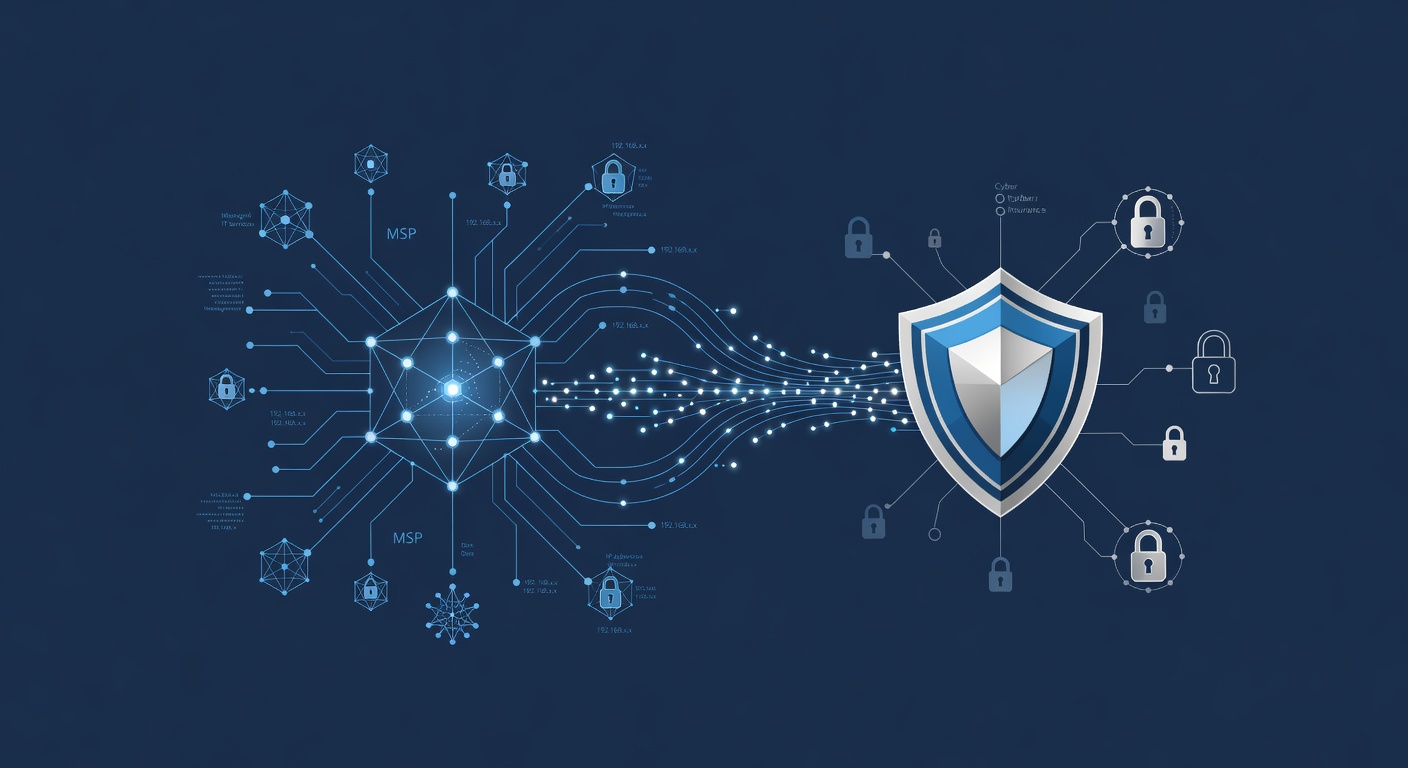
Here's how I think about it: your MSP is your first line of defense. They're the guards at the gate, constantly watching for trouble. They make an attack harder, slower, and less likely.

But cyber insurance is the safety net. It's what catches you when someone gets through anyway.

Together, they create a strategy that actually makes sense. Your MSP keeps most bad stuff away. Cyber insurance handles the stuff that gets through anyway. And that combination dramatically reduces the actual harm your business faces.

The cost is usually way less than people expect. A basic cyber insurance policy for a small business might be a few hundred dollars a month. For that, you're protecting your entire company from financial ruin. Compare that to the average cyberattack cost for small businesses — over $16,000 a year on average — and it becomes a pretty easy math problem.

What You Should Do This Week

If you already have an MSP but no cyber insurance, get a quote. Call your insurance broker tomorrow. It'll take 30 minutes of your time and you'll actually know where you stand.

If you don't have either, start with an MSP first. That's your foundation. Then layer on cyber insurance. Both matter, but MSP + cyber insurance is the combination that actually protects you.

The worst position to be in is having neither. The second-worst position is having false confidence that one covers you. Real protection requires both.

Tags: ['cybersecurity', 'cyber insurance', 'managed services msp', 'small business protection', 'data breach prevention', 'risk management', 'smb security']