Your business probably thinks it's secure—until it isn't. There are three main types of security assessments that can literally save you from disaster, and they all work differently. Here's what you actually need to know about protecting your digital assets before hackers find what you've been missing.
The Three Security Assessments Every Business Needs (But Most Skip)
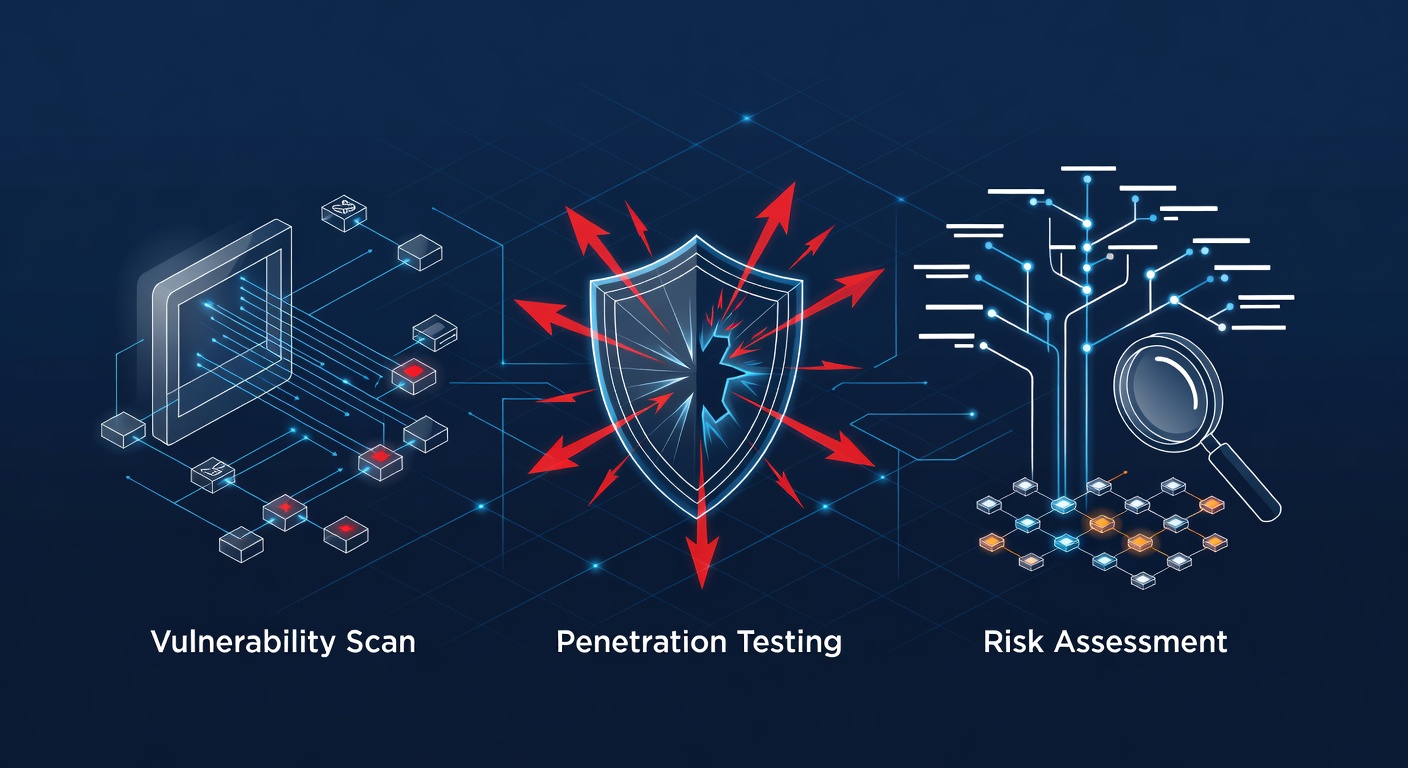
The Three Security Assessments Every Business Needs (But Most Skip)
I'll be honest—when I first started learning about cybersecurity, the terminology felt overwhelming. Everyone threw around terms like "vulnerability scans," "penetration tests," and "risk assessments" like they were interchangeable. They're not. And that confusion? It costs businesses millions every year.
The truth is, each type of security assessment serves a completely different purpose. Think of it like getting a physical exam at the doctor. You don't just go in once and assume everything's fine for the next decade. You need different tests for different things—blood work, imaging, specialist consultations. Your digital security works the same way.
Risk Assessment: Your Strategic Security Blueprint
Let's start with the big-picture view: the risk assessment.
A risk assessment is basically your organization sitting down and asking, "What could actually go wrong, and how bad would it be?" It's strategic thinking, not technical scanning.
Here's what happens in a real risk assessment:
Your security team (or an outside expert) examines your entire business environment. They're looking at your systems, your data, your employees, your physical infrastructure—everything. They identify potential threats (a disgruntled employee, ransomware spreading through your network, a data breach of customer information) and vulnerabilities that could enable those threats (outdated software, weak passwords, missing backups).
Then comes the prioritization part, which honestly is where the real value lives. Not all risks are created equal. A vulnerability that could affect one person's spreadsheet is very different from a vulnerability that could expose customer credit card data. A good risk assessment helps you understand which problems actually matter.
The outcome? You get a roadmap. You know what needs fixing first, what can wait, and what's worth the investment to address. Most businesses are shocked to discover they've been obsessing over minor issues while ignoring bigger threats.
Vulnerability Scans: The Automated Early Warning System
Now we're getting technical—but not in a complicated way.
A vulnerability scan is what happens when you run automated tools across your systems looking for known weaknesses. Imagine a robot inspector walking through your building checking every door to see if it's locked, every window to see if it's secure, every outlet to see if it's properly grounded.
These automated tools are looking for specific, well-documented vulnerabilities:
- Software that hasn't been updated in six months (yes, this is a huge problem)
- Missing security patches from vendors
- Misconfigurations that leave doors open unintentionally
- Default passwords that were never changed
- Services running that shouldn't be running
Why does this matter? Hackers have lists of known vulnerabilities too. They use automated tools to scan the internet looking for easy targets. If you haven't patched your systems, you're basically a marked target. A vulnerability scan finds these problems before the bad guys do.
The outcome is straightforward: you get a list. "Hey, you're running Windows Server 2012 with no updates. You're missing these critical patches. Your database is using default credentials." It's not pretty, but it's incredibly useful because it's actionable.
The thing I appreciate about vulnerability scans is the speed. An organization with 500 computers and dozens of systems can get a comprehensive scan in hours or days, not weeks. It's not the deepest analysis you can do, but it's fast and it catches the obvious problems.
Penetration Testing: The Reality Check
Here's where things get interesting—and a little dramatic.
A penetration test (or "pen test") is when you hire ethical hackers to actually try to break into your systems. Not in a destructive way, but in a controlled way with permission. These are people who think like criminals but work for you.
During a pen test, these professionals use real attack techniques. They might:
- Try to phish your employees with fake emails (to see if anyone falls for it)
- Attempt SQL injection attacks against your databases
- Try to escalate privileges once they're inside your network
- Look for ways to move laterally from one system to another
- Attempt to exfiltrate data without getting caught
Why is this different from a vulnerability scan? Because pen testers aren't looking for known vulnerabilities in a list. They're looking for actual weaknesses that could be exploited in the real world. They're creative. They think like attackers. Sometimes they find problems that automated tools completely missed.
The outcome is a detailed report of exactly how someone could actually break in. Not theoretical problems—real, demonstrated methods. "Your firewall blocks direct access to your database, but we found this other route through your web server. Here's how we did it. Here's how to fix it."
Here's The Thing Most Businesses Get Wrong
Most organizations do one of these assessments and think they're done. Maybe they run an annual vulnerability scan. Maybe they do a pen test once when a new executive demands it. Then they go back to business as usual.
The reality? You need all three, and you need them regularly.
A risk assessment sets your strategy (do this annually, minimum). Vulnerability scans catch the obvious problems (run these monthly or quarterly). Penetration tests validate whether you're actually secure (annual or after major changes).
They're complementary. A vulnerability scan might find a missing patch. A penetration test will tell you if that missing patch actually matters for getting into your system. A risk assessment will prioritize whether fixing that patch should happen before other improvements.
The Practical Path Forward
If you're a small business and can't afford all three immediately, here's my honest advice:
Start with a risk assessment from a professional. It doesn't have to be expensive, and it gives you the foundation. Then run regular vulnerability scans—there are free tools available. Finally, save up for at least one annual penetration test, or do it every other year to start.
The cost of assessment is always—and I mean always—cheaper than the cost of a breach.
Your organization is running systems that matter to your business. Spend the time to understand what could go wrong, find the obvious problems, and stress-test your defenses. Your future self will thank you.
Tags: ['cybersecurity', 'security assessment', 'vulnerability scanning', 'penetration testing', 'risk management', 'network security', 'business security']