Modern hackers aren't trying to break through your security walls anymore. They're walking through the front door with legitimate credentials. Here's why employee training has become the real battleground in fighting identity theft—and what actually works.
Why Your Biggest Security Risk Isn't Your Firewall—It's Your Coworkers (And How to Fix It)
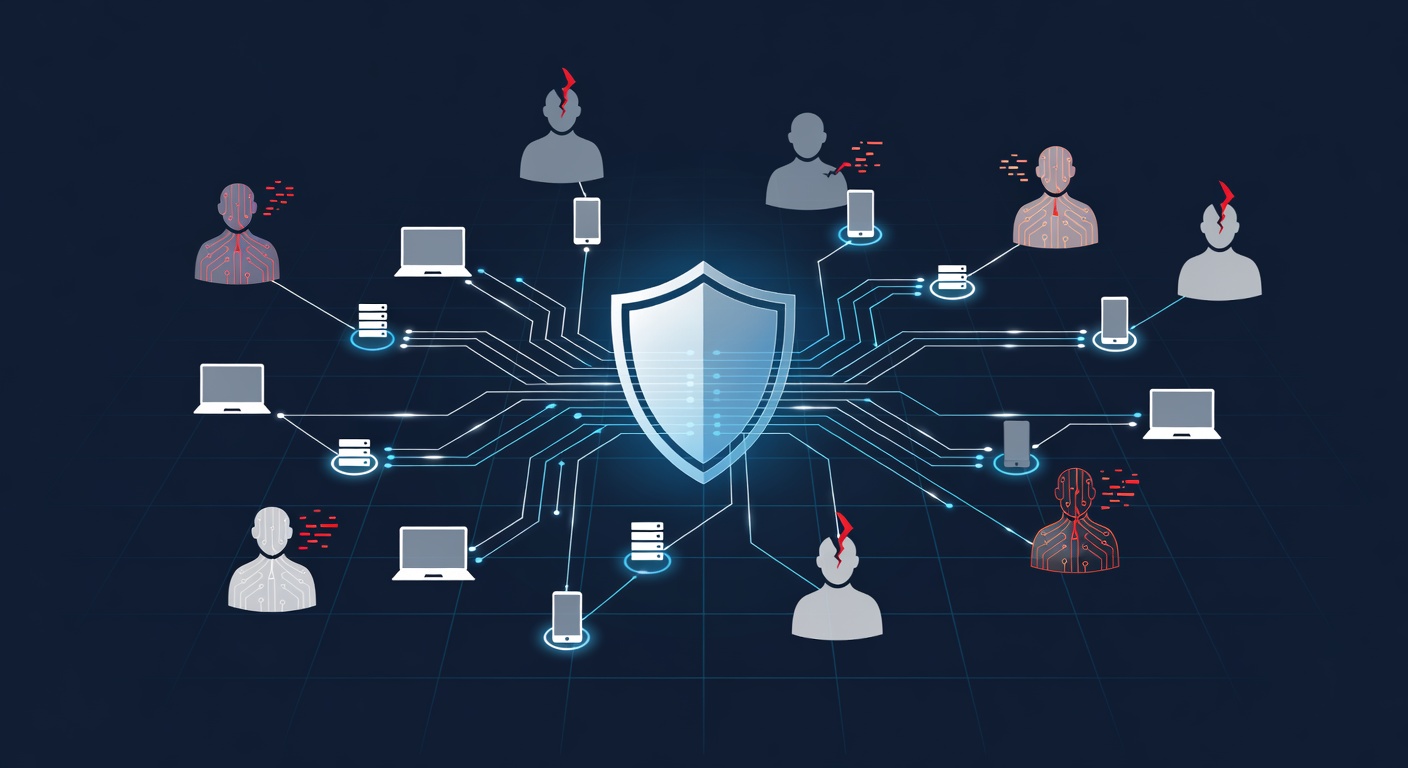
Why Your Biggest Security Risk Isn't Your Firewall—It's Your Coworkers (And How to Fix It)
Remember when cybersecurity was all about firewalls and antivirus software? Yeah, those days are basically over.
Here's the uncomfortable truth that keeps security experts up at night: 82% of modern data breaches involve zero malware. Let that sink in. No fancy hacking tools. No sophisticated exploits. Just someone with the right password logging in like they own the place.
The game has completely changed, and most organizations haven't caught up yet.
The Credential Takeover Problem
Let me paint a scenario for you. An employee gets a phishing email that looks legitimate. They click. Their username and password get stolen. A few hours later, an attacker is inside your network, doing whatever they want—transferring money, stealing data, installing backdoors. From the company's security logs, it looks like normal business activity.
This isn't paranoia. It's actually happening right now. About 35% of cloud security incidents involve attackers abusing legitimate, stolen credentials. That's not a coincidence—that's the new standard operating procedure for organized cybercriminals.
Identity theft has evolved from opportunistic crime into a precision, industrialized operation. These aren't lone hackers in basements anymore. They're organized groups with dedicated resources, market research, and proven tactics.
And here's the kicker: firewalls can't stop someone who already has the keys.
People Are Your New Perimeter
This is where things get real. In today's threat landscape, your employees aren't just part of your security—they are your security.
Think about it: What's harder to attack—a locked door (your firewall) or a person you can manipulate into opening it for you?
The answer is obvious, which is exactly why attackers focus all their effort on social engineering, phishing, and identity theft. It works. It's predictable. And it bypasses expensive security infrastructure with embarrassing ease.
The good news? This also means your organization has a real opportunity to defend itself. Unlike zero-day vulnerabilities or advanced malware, human behavior can be changed through training and awareness.
The Phishing Evolution Nobody's Talking About
Phishing hasn't gone away. It's just gotten smarter.
Gone are the days of obvious typos and requests for your "bank details" from "PayPal Support." Modern phishing attacks are:
- Hyper-personalized (they know your name, your boss's name, recent projects)
- AI-generated (grammatically perfect, contextually relevant)
- Designed for credential theft (not just passwords, but session tokens and authentication codes)
The scariest part? The attackers are using AI to craft messages that are almost indistinguishable from legitimate business communication.
Here's what actually works against this: employees who know what to look for. Not perfection—just practical vigilance. Spotting a URL that's almost right but not quite. Recognizing when someone's asking for something unusual. Flagging that request that came in at 3 AM from your CFO's email address.
Organizations that provide consistent, ongoing security training (not just a once-a-year checkbox exercise) see measurably better results. Employees trained regularly are faster at recognizing these threats and more likely to report them before damage occurs.
Deepfakes and the "Verify First" Rule
If you thought phishing was scary, welcome to 2026.
Attackers are now using voice cloning and deepfake videos to impersonate executives, board members, and even family members. Imagine getting a video call from your CEO requesting an urgent wire transfer. The face looks right. The voice sounds right. But it's AI-generated.
This is where the "verify first, act second" principle becomes non-negotiable.
The training that actually moves the needle teaches employees to:
- Pause when they see urgency (because urgency is a manipulation tactic)
- Verify through a separate channel (call the person back using a known number, not the one in the suspicious message)
- Recognize deepfake indicators (unnatural audio patterns, slight facial distortions, lip sync issues)
It sounds simple, but it's genuinely effective. When you train people to slow down and verify before acting, you disrupt the entire attack pattern. These scams only work because they rely on urgency and panic.
The Bad Habits That Cost You Money
Let's talk about the stuff nobody wants to admit they're doing.
Password reuse. You know, reusing that same password across 15 different accounts because remembering one password is hard enough, right?
MFA fatigue. Getting push notifications on your phone to approve logins and just... clicking "approve" without thinking because you're tired of the notifications.
Oversharing online. Posting about your job, your company, your colleagues on LinkedIn and Facebook—giving attackers a treasure trove of information for social engineering.
These habits aren't character flaws. They're just... human. But they're also the reason one breached password can become a complete identity takeover across multiple accounts.
Here's what actually changes this behavior:
| The Problem | The Solution | Why It Works | |---|---|---| | Password reuse everywhere | Using a password manager | One stolen password doesn't compromise everything | | Blindly approving MFA requests | Intentional verification mindset | You actually think before clicking approve | | Sharing too much online | Digital footprint awareness | Fewer attack angles for social engineering |
When employees adopt these practices, they're not just protecting themselves—they're removing footholds that attackers depend on. Each person who switches to a password manager, resists MFA fatigue, and manages their digital presence carefully is one less vulnerability in your organization.
Scale that across a whole company? Suddenly, you're not an easy target anymore.
The Clock is Ticking
Here's a stat that should terrify you: It takes an average of 22 months for an identity theft victim to recover.
Twenty-two months. That's almost two years of dealing with fraud, unauthorized charges, credit damage, and the general nightmare of having your identity stolen.
This is why speed matters. The faster someone reports a suspicious incident, the faster your security team can respond. And the faster you respond, the smaller the damage.
The organizations winning at this aren't the ones with the fanciest firewalls. They're the ones with a security culture where employees understand one simple rule:
If you're unsure, report it. No judgment. No punishment. Just report it.
This means creating an environment where people feel safe reporting potential breaches without fear of being blamed or fired. It means celebrating the person who caught the phishing email, not punishing them for almost falling for it.
The Reality Check
I'm going to be honest with you: No amount of training will make your organization 100% secure. That's not realistic.
What is realistic is reducing your organization's appeal as a target. Attackers follow the path of least resistance. If your employees are trained, aware, and vigilant, they'll move on to easier prey.
Training works because it targets the actual weak point in modern cybersecurity: not your software, but your people.
And people can change. They can learn. They can build better habits.
The companies that are getting this right aren't doing it because they have perfect employees. They're doing it because they've invested in creating a security-first culture where awareness isn't a burden—it's just how things work.
The bottom line? Your firewall is important. Your antivirus is important. But your employees? They're the front line of defense. Train them well, support them, and you'll sleep better at night.
Tags: ['identity theft prevention', 'phishing awareness', 'employee security training', 'credential abuse', 'deepfake detection', 'cybersecurity culture', 'password security', 'mfa fatigue']