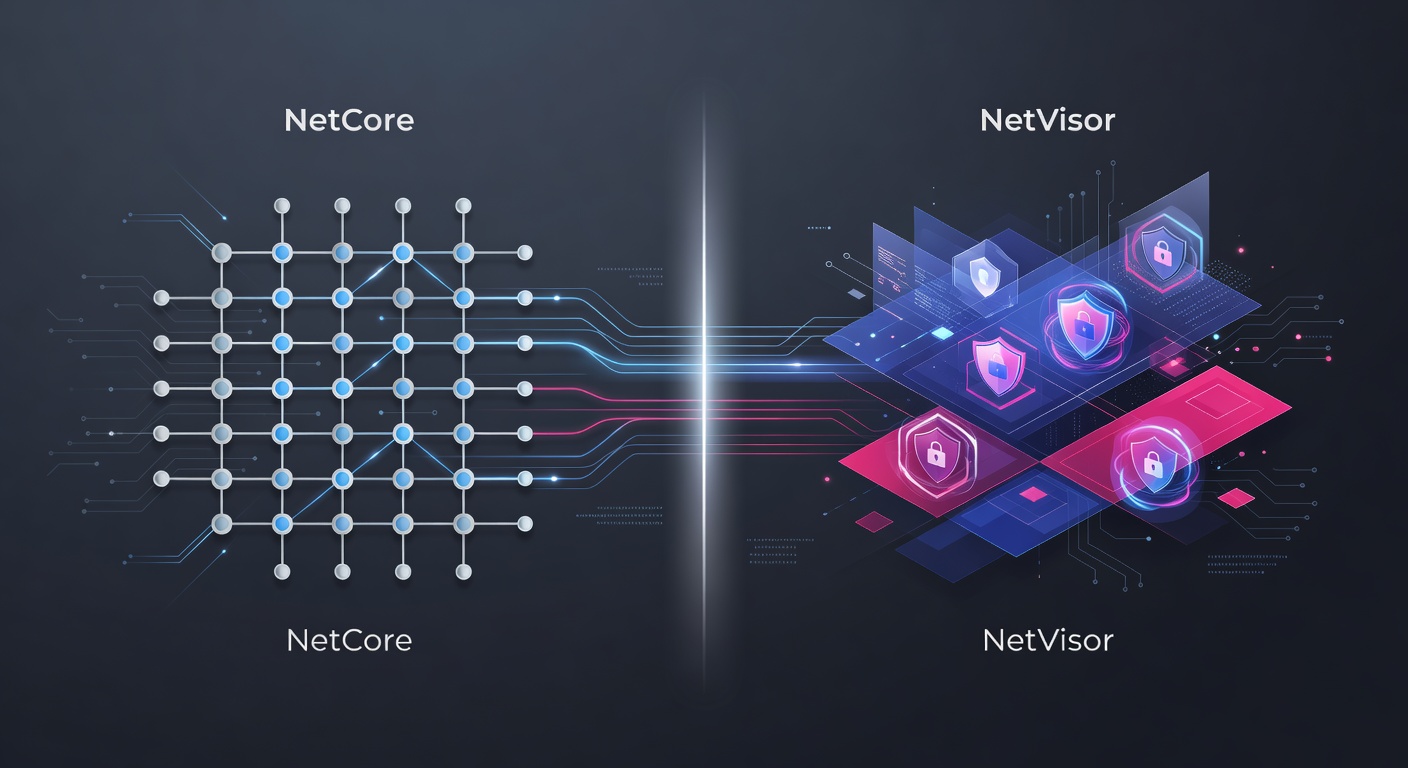
NetCore vs NetVisor: Why You Need to Know the Difference (and What It Means for Your Business)
Confused about whether NetCore services come bundled with NetVisor? You're not alone. Many businesses assume these are one-and-the-same, but they're actually separate offerings that serve completely different purposes. Here's what you really need to know.
Understanding the NetCore and NetVisor Split
Let me be honest: tech vendors love creating confusing product names. When you hear "Net" this and "Net" that, it's easy to assume they're all part of the same ecosystem. But when it comes to NetCore and NetVisor, you need to understand that these are two distinct services serving different parts of your infrastructure.
I'll break down what's actually happening here, because this distinction matters more than you might think.
What NetCore Actually Does
NetCore is essentially your infrastructure management and support service. Think of it as the maintenance crew for your network hardware. If you're running:
Firewalls (your first line of defense against threats)
Network switches (the backbone of your internal communications)
Wireless access points (keeping your team connected)
UPS systems (protecting you from power disasters)
...then NetCore is the service that keeps these systems running smoothly. And here's the thing—these aren't set-and-forget devices. They need regular software updates, security patches, and monitoring to stay effective.
So Where Does NetVisor Come In?
NetVisor is a separate product that handles different aspects of your network management. While NetCore focuses on hardware device management and support, NetVisor operates in its own lane with its own set of features and benefits.
The critical takeaway? Just because you have one doesn't automatically mean you have the other.
Why This Matters for Your Business
Here's where I think many companies stumble: they assume comprehensive network management means having everything covered. But that's like assuming your car's oil changes are included with your tire rotation service—they're related, but they're typically separate.
If you're relying on NetVisor alone and thinking your infrastructure is fully supported, you might have a blind spot. Conversely, if you've invested in NetCore but haven't explored what NetVisor offers, you could be missing valuable capabilities elsewhere in your network stack.
The real risk? Infrastructure drift. When nobody's explicitly responsible for keeping those firewalls, switches, and access points patched and updated, security vulnerabilities pile up. I've seen networks compromised not because of sophisticated attacks, but because basic maintenance fell through the cracks due to unclear responsibility lines.
What You Should Actually Do
If you're unsure whether you have NetCore, NetVisor, both, or neither, here's my advice: talk to your Customer Success Manager. I know that sounds like corporate speak, but in this case, it's genuinely the right move.
Your CSM can clarify:
What infrastructure support you currently have in place
Which hardware systems are actively monitored and maintained
What gaps might exist in your setup
Whether adding NetCore (or evaluating NetVisor separately) makes sense for your specific situation
Don't assume anything. Networks are too critical to your business to leave this vague.
The Bottom Line
NetCore and NetVisor are different products with different purposes. One doesn't automatically include the other. Your job is to understand which services you actually need and make sure you're not running blind on critical infrastructure management.
If there's any doubt, reach out to your vendor. It takes five minutes of clarification versus the potential headache of discovering a year later that your firewalls haven't been properly patched. Trust me—it's worth the conversation.