Working on a plane feels productive, but the reality is way more complicated than it seems. Between sketchy Wi-Fi networks and nosy seat neighbors, your sensitive data is basically flying unprotected. Here's what actually works to stay secure in the air.
Is Your Laptop Actually Safe at 30,000 Feet? What You Need to Know Before Working on a Plane
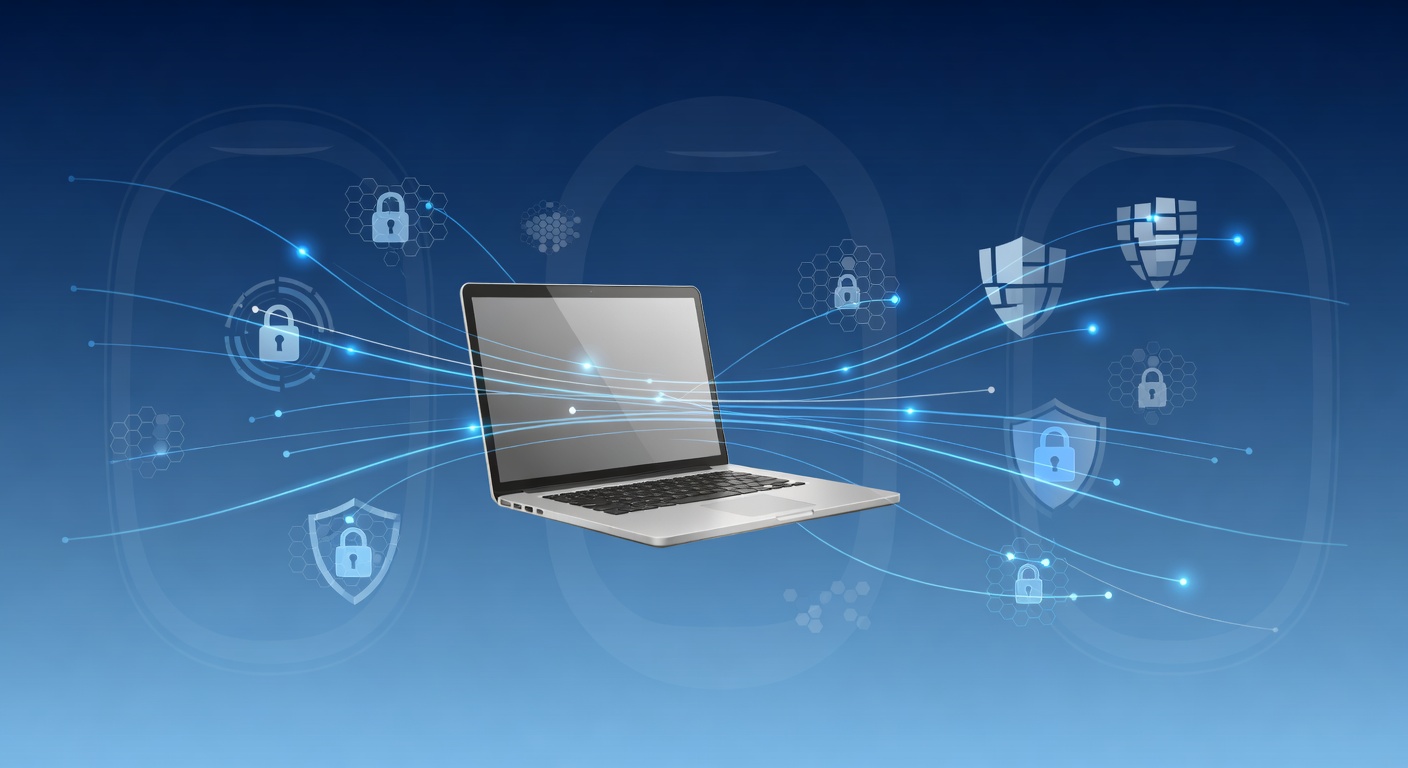
The Romantic Myth vs. The Digital Reality
There's something appealing about the idea of getting work done on a flight. No interruptions, nowhere to be for hours, and a built-in excuse to ignore Slack messages. It sounds perfect, right?
Except it's not. Not even close.
The problem is that working from an airplane creates this false sense of security. You're isolated from the world, cruising at altitude, and it feels like nothing bad could possibly happen. But that's the exact thinking that puts your data at risk. The higher you fly, the lower your actual protection tends to be.
Why In-Flight Wi-Fi Is Like Handing Out Your Passwords
Let me be real with you: in-flight Wi-Fi is basically an open invitation for cybercriminals.
Here's how it works. When you connect to that "airplane Wi-Fi" network, you're connecting to something that's incredibly easy to intercept. Unlike your home network—which you (hopefully) secured with a strong password—airplane networks are wide open. Anyone on that plane could potentially see what you're doing online.
And it's not just theoretical. There's a documented case of an Australian man who literally created fake Wi-Fi networks on flights to steal people's social media login credentials. He wasn't some sophisticated hacker with years of experience. He just knew enough to set up a rogue access point and collect credentials from unsuspecting passengers.
Think about that for a second. Someone sitting three rows behind you could be watching your every keystroke.
The Less Obvious Problem: Shoulder Surfers and Prying Eyes
Here's something people don't talk about enough: the physical security issue.
You're sitting in a metal tube with hundreds of strangers, squeezed into seats where your neighbor can literally see your entire screen if they lean slightly. Privacy screens help a little, but they're not a perfect solution. I've definitely seen confidential information leak just because someone was working carelessly on a flight—and I bet you have too.
People have found out about job losses, seen confidential business deals, and discovered unreleased products just by glancing at someone's laptop. It happens more often than airlines would like to admit.
So What CAN You Actually Do?
Okay, so the situation sounds pretty grim. But there are real steps you can take to reduce your risk:
Use a VPN, Full Stop
A Virtual Private Network encrypts your connection, making it exponentially harder for someone to intercept your data. It's not perfect (nothing is), but it's a massive improvement over connecting directly to in-flight Wi-Fi. Think of it as creating a secure tunnel for your data—someone might see that traffic is happening, but they can't see what's inside.
Avoid Sensitive Transactions Entirely
Don't log into your bank account. Don't make purchases. Don't do anything involving passwords or payment information. Just... don't. These activities are where cybercriminals focus their efforts because the payoff is huge. Save them for when you're on a secure network at home or at your destination.
Download Everything Before You Leave
This is honestly the simplest and most effective strategy. Download your work documents, presentations, emails, and any entertainment you might want before you even get to the airport. Work offline, edit offline, do everything offline. When you land, you can sync and upload from a secure network.
This removes the entire problem. No internet connection needed.
Turn Off Automatic Wi-Fi
Your phone and laptop are probably set to automatically connect to available networks. Change that. Manually connect only when you've consciously decided it's worth the risk. This prevents your devices from connecting to rogue networks without your knowledge.
Update Everything Before You Fly
Make sure your operating system, browser, and security software are all up-to-date before you board. Vulnerabilities get discovered constantly, and updates patch them. Flying with outdated software is like flying with a broken seatbelt.
Use Strong, Unique Passwords
I know, I know—everyone says this. But it matters way more when you're on public networks. If someone manages to intercept your credentials, at least they won't be able to use them on other accounts if each password is completely different.
The Honest Question: Is the Productivity Worth It?
Here's what I genuinely want you to think about: what are you actually gaining by working on a plane?
A few hours of uninterrupted time? Sure. But you're trading that for exposure to real security risks. Is whatever work you're trying to finish so urgent that it can't wait until you land? Most of the time, the answer is probably no.
There's something kind of beautiful about flights being one of the few places where you're genuinely unreachable. No emails coming in, no Slack notifications, no pressure to respond immediately. What if you actually used that time to disconnect?
A Better Approach: The Digital Detox
This might sound crazy in a productivity-obsessed culture, but flights are the perfect opportunity for a proper break.
Read a book. Listen to a podcast. Watch something mindless and actually enjoy it. Sleep. Stare out the window and think about nothing. Your brain will thank you, and your security won't be compromised in the process.
I'm not saying you can never work on a plane. But the more I think about it, the more I'm convinced that for most people, most of the time, the risk-to-benefit ratio just doesn't make sense.
The Bottom Line
Can you work safely from an airplane? Technically, yes—if you use a VPN, avoid sensitive transactions, and keep your expectations low. Practically speaking? It's probably not worth the hassle.
The safest option is always to download what you need, work offline, and save the internet-dependent stuff for when you're back on solid ground. Your data will be safer, your flight will be more relaxing, and you'll probably actually get more quality work done when you're not paranoid about security.
Flying is one of the few times we're genuinely disconnected from the world. Maybe that's not a bug—maybe it's a feature.
Tags: ['airplane security', 'in-flight wifi', 'cybersecurity', 'public wi-fi risks', 'vpn', 'data protection', 'remote work security', 'travel privacy', 'phishing attacks', 'shoulder surfing']