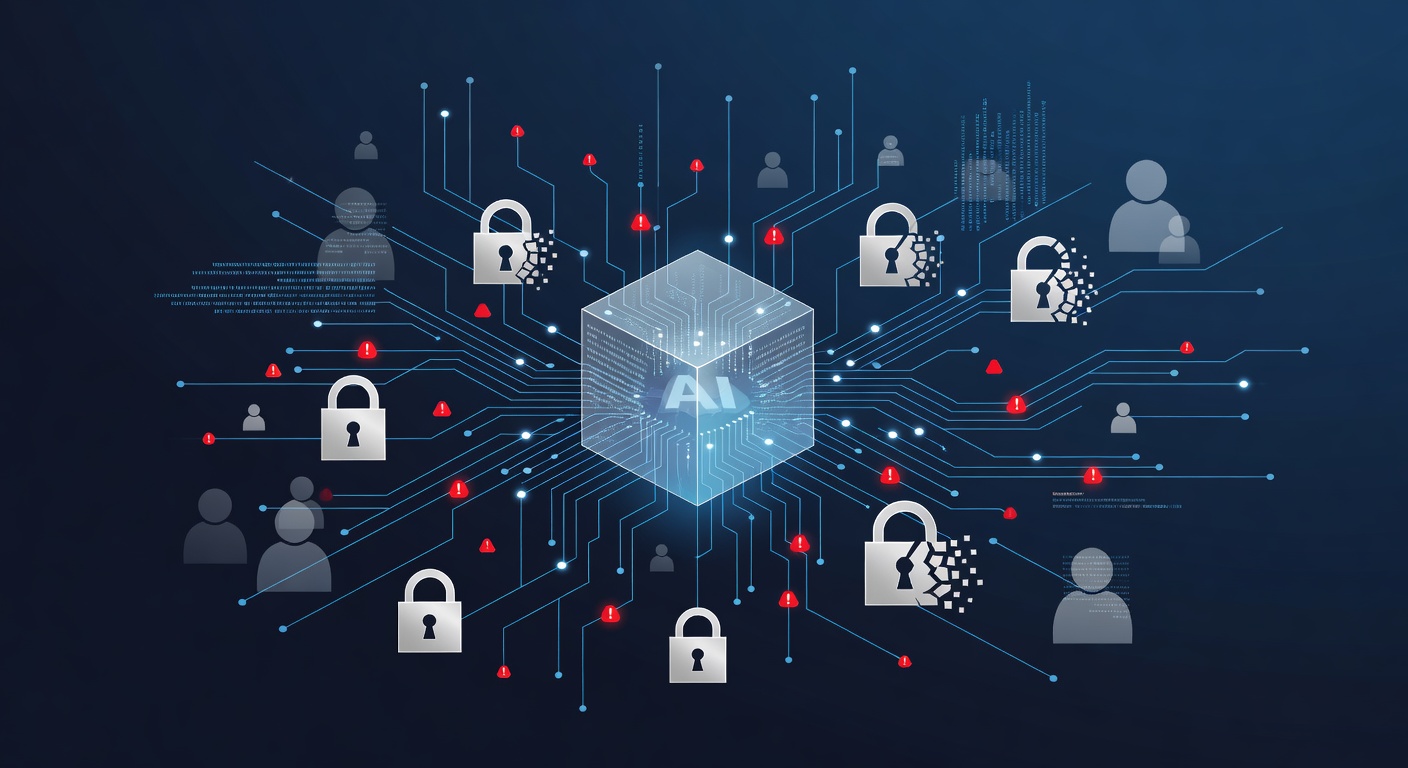
The Hidden Privacy Crisis of AI: Which Version Are You Actually Using?

The Hidden Privacy Crisis of AI: Which Version Are You Actually Using?

Every time you paste sensitive information into ChatGPT or use AI features embedded in your favorite apps, you're making a privacy bet you might not fully understand. Let's break down the three types of AI models out there and help you figure out which ones are actually safe for your business and personal data.

The Hidden Privacy Crisis of AI: Which Version Are You Actually Using?

I'll be honest—the AI landscape is confusing. One day you're reading about how amazing ChatGPT is, the next day you're hearing horror stories about companies accidentally leaking trade secrets to competitors. The problem? Most people don't realize there are fundamentally different types of AI, and they come with wildly different privacy implications.

Let me walk you through this, because understanding the difference could literally save your business from a catastrophic data breach.

The Three Types of AI (And Why They Matter)

Think of AI like restaurants. You've got the all-you-can-eat buffet (public AI), the private chef at your home (private AI), and the meal delivery service that shows up at your door with mystery ingredients (embedded AI). Each has its place, but you need to know what you're getting into.

Public AI: The Double-Edged Sword

Public AI systems—like ChatGPT, Google Gemini, and Perplexity—are the rockstars of the AI world right now. They're accessible, powerful, and honestly? They're pretty amazing to play around with.

Here's why they're so compelling: they've been trained on massive amounts of diverse data from across the internet. That means they're incredibly capable and get smarter every single day as millions of people use them. You don't need expensive infrastructure or technical expertise to get started. You literally just type something and hit enter.

The convenience factor is huge. For quick brainstorming, creative writing, coding help, or general research questions? Public AI is fantastic and basically free.

But here's where I need to be direct with you: Every single thing you type into these tools might be used to train the model further. That's not paranoia—it's literally how they work. Your prompt, your questions, your specific business strategies, your patient data, your financial information... all of it could theoretically be analyzed, learned from, and fed into a system that your competitors have access to.

I'm not saying the companies running these tools are evil. They're not. But the business model fundamentally relies on data, and the privacy protections, while decent, aren't ironclad. Data breaches happen. Terms of service change. Courts issue subpoenas.

For personal use? Fine. For anything proprietary or sensitive? This is where things get risky.

Private AI: The Fort Knox Approach

Private AI is the opposite side of the spectrum. These are AI systems that live entirely within your organization's walls, trained exclusively on your data, never touching the public internet.

Think of Microsoft 365 Copilot configured in private mode—it learns from your company's documents, emails, and data stores, but that information never leaves your servers. Or imagine an AI system a healthcare provider runs locally to analyze patient records. The data stays put.

The privacy advantage is obvious. Your sensitive information doesn't travel to the cloud. It doesn't get mixed into a training dataset that someone else can access. It doesn't create compliance risks. For regulated industries like healthcare, finance, and law, this is often the only responsible option.

But there's a trade-off. Private AI requires more investment. You need infrastructure, technical expertise, and ongoing maintenance. You're not benefiting from the massive training datasets that public models get. Your AI will be good, but it will only be as smart as the data you feed it. And setup is definitely not a plug-and-play operation.

Plus, you own both the benefits and the headaches. If something goes wrong, it's on you.

My take: If you handle sensitive data, private AI isn't an option—it's a necessity. The investment is worth it.

Embedded AI: The Sneaky Risk

This is the one I think people are least aware of, which makes it particularly dangerous.

Embedded AI refers to AI capabilities baked directly into the software you already use every day. Your email client suddenly has an "write this email for me" button. Your note-taking app has a "summarize this document" feature. Your CRM has an "generate talking points" tool.

The convenience is seductive. You're already in the app. You don't need to switch contexts. It just works.

But here's my honest question for you: Do you actually know what happens to your data when you use these features?

I'm guessing most people haven't read the fine print. And that's where things get tricky. That embedded AI might be sending your data to third-party servers. It might be using your information to train the vendor's models. It might be sharing data with other companies. And because the feature feels like it's part of the app you already trust, you might not think twice about it.

I've seen companies get blindsided by this. They enable an "AI assistant" in their collaboration tool, start using it for work stuff, and six months later realize they've been sending confidential customer data to a cloud provider they've never heard of.

So... What Should You Actually Do?

First, audit your AI usage. Seriously. Make a list of every AI tool your organization is using—including those embedded features most people forget about.

Second, ask the hard questions. Where does your data go? Who owns it? How is it used? Can you opt out? For every tool, you need clear answers. If you can't get them, that's a red flag.

Third, match the tool to the sensitivity of your data. Public AI? Fine for brainstorming and research. Embedded AI? Dig into those privacy policies before you start feeding it important stuff. Private AI? That's for your crown jewels.

Fourth, stay paranoid. I don't mean live in fear, but maintain a healthy skepticism about any AI tool that makes data promises that seem too good to be true. If something is free and easy to use, ask yourself: What am I actually paying for?

The Real Talk

AI is here to stay, and these tools genuinely solve real problems. Public AI has democratized access to powerful technology in ways that are honestly incredible. Private AI lets organizations leverage AI responsibly. And embedded AI, when used correctly, adds legitimate value to products you already use.

But each comes with a different risk profile, and you need to understand yours before you start typing sensitive information into a chatbot. Your data is valuable—sometimes literally worth millions. Don't treat it like it's worthless just because a tool is convenient.

The companies building these tools aren't the enemy. But they're not your data security team either. That job belongs to you.

Tags: ['ai privacy', 'data security', 'chatgpt risks', 'business data protection', 'ai models explained', 'cybersecurity', 'data privacy']