When Everything Falls Apart (And You Have to Keep Going)
Let me be honest with you: business failure stories are everywhere, but most of them skip the painful middle part. They either end in total collapse or triumphant comeback, with no room for the messy reality in between.
The truth is messier than any movie script.
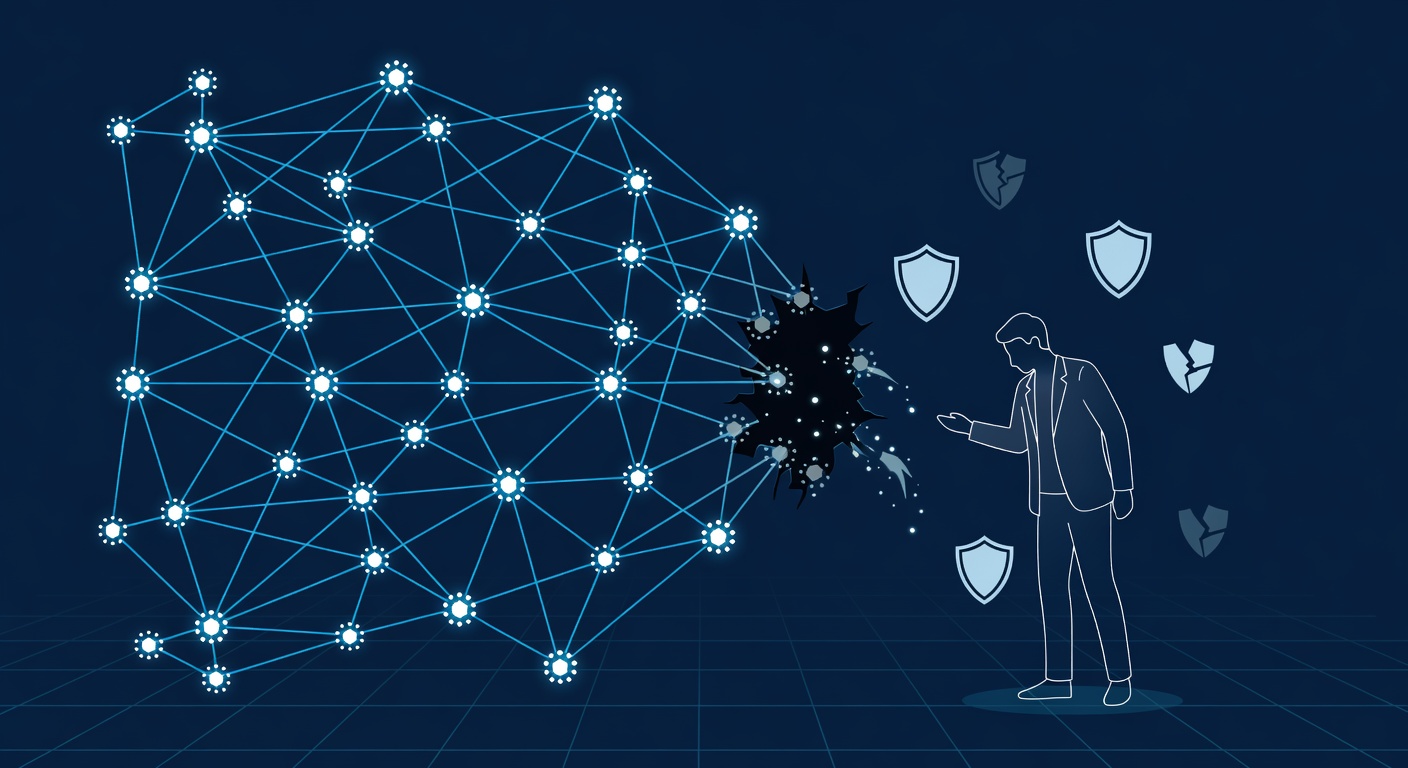
Imagine losing over 20% of your top-line revenue. Not gradually—suddenly. One major client relationship ends, and a significant portion of your income just... vanishes. That's the reality one tech leadership team faced at the start of 2024, and I think their story is worth talking about because it reveals something most business articles won't admit: leadership gets really hard when you have to hurt people you care about.
The Decision Nobody Wants to Make
Here's where most business commentary gets sanitized. When you lose that kind of revenue, you don't just tighten your belt and carry on. You make tough calls. You restructure. You say goodbye to talented people—people who trusted your company, people who believed in the mission.
One of the hardest goodbyes included a former mentor. Think about that for a second. These weren't abstract numbers on a spreadsheet. They were real people with families, with careers, with loyalty to an organization that suddenly couldn't keep them.
The leadership team didn't pretend this was easy or paint themselves as heroes making "tough but necessary" decisions. Instead, they made personal sacrifices too. That's the part you rarely hear about—not the layoffs, but the willingness of leaders to take hits to their own compensation and benefits to preserve the company's integrity.
That's not a movie moment. That's just being human about a terrible situation.
The Real Secret Isn't Bouncing Back—It's Not Breaking in the First Place
So what actually kept the company standing when 20% of its revenue walked out the door?
The answer is boring: the people who stayed showed up.
A NOC Manager named John Krivich put it perfectly: maintaining calm, trust, and morale while everything's shaking isn't glamorous. It's just necessary. Every department, every team member, kept doing their job at the same quality level while the entire foundation was shifting beneath them.
Rachel Clarke, the Services Manager, described it as unified teamwork that sparked positive developments. When everything goes wrong, you either fragment or you band together. This team banded together.
Here's what I find genuinely interesting about this: resilience isn't about being strong when things are hard. It's about maintaining standards when you have every reason to let them slip. It's about saying "yes, we're struggling, and no, our clients won't notice the difference in our service."
The Part That Actually Matters: What They Built After
This is where the story gets interesting for anyone in tech or business: crisis created space for innovation.
Think about it. When you're operating at full capacity with a massive revenue stream, you rarely have time to rethink your entire operation. You're too busy maintaining what works. But when you lose 20% overnight, suddenly you're asking different questions: What could we be doing better? What processes are actually holding us back? What does our business look like if we rebuild it intentionally?
That's exactly what happened in 2024.
NetSafe: Security Built for Real Businesses
Out of the wreckage came NetSafe, a managed security suite that addresses a real problem in the market: most cybersecurity solutions are either overkill for small businesses or inadequate for enterprises. This wasn't some generic "we added security features" announcement. This was a thoughtful response to what the market actually needs.
The approach was smart too:
- NetSafe Server Services tackles the unglamorous but critical work of secure server management
- NetSafe Strategy Services offers vCISO (virtual Chief Information Security Officer) work—basically strategic cybersecurity planning without the six-figure executive hire
Making the Boring Stuff Actually Better
But here's what really impressed me: they also focused on the stuff that doesn't make headlines.
A self-service procurement portal doesn't sound revolutionary until you realize you're the client who's been waiting three days for a quote on hardware. A revamped product development process doesn't change the world until you're the team member whose work suddenly has clear accountability and better integration with the rest of the company.
Rewst automations that save seconds per task? When you multiply that across thousands of endpoints, those seconds become hours of human time freed up to do more strategic work.
This is the unsexy innovation that actually matters. Not the shiny new product, but the systems that make everything work better.
The Honest Truth About 2025
They're heading into next year cautiously optimistic. No grand promises about "explosive growth" or "dominating the market." Just practical goals: expand what works, deepen client relationships, keep refining the processes.
There's something refreshing about that level of realism.
What This Teaches the Rest of Us
If you work in tech, run a business, or just watch how organizations behave under pressure, this story offers some genuine wisdom:
1. Plan for the worst while hoping for the best. The leadership team saw this risk coming in 2023 and worked on mitigation strategies. It didn't prevent the pain, but it meant they weren't caught completely flat-footed.
2. Your people are your actual competitive advantage. The company didn't survive 2024 because of brilliant strategy (though they had it). It survived because teams chose to maintain excellence when everything was shaking.
3. Crisis forces innovation. Some of their best work in 2024 came directly from the pressure of rebuilding. Desperation can actually clarify priorities.
4. Honesty matters more than heroic narratives. Nobody at this company pretended the decisions were easy or that layoffs were anything other than painful. That honesty probably helped the remaining team understand this wasn't about failure—it was about recalibrating for survival.
The Bottom Line
2024 was a year where a tech company lost 20% of its revenue, made difficult personnel decisions, and came out the other side with new products, better processes, and a team that still believed in the mission.
That's not a dramatic turnaround story. It's not a failure-to-success narrative. It's just what resilience actually looks like: unglamorous, painful, but ultimately about doing the right thing for the people and clients who stuck around.
And honestly? That might be the most valuable lesson any business story can teach.
Tags: ['business resilience', 'tech industry challenges', 'company culture', 'cybersecurity innovation', 'leadership decisions', 'crisis management']